
‘There Will Be No Forgiveness’: A Formula Broad Enough for Anyone
Medvedev said those who left Russia and wish it defeat would receive no forgiveness. The formula is deliberately elastic: almost anyone can be placed under the label. We explain how it works — and why forgiveness is not the currency in which we deal with Moscow.
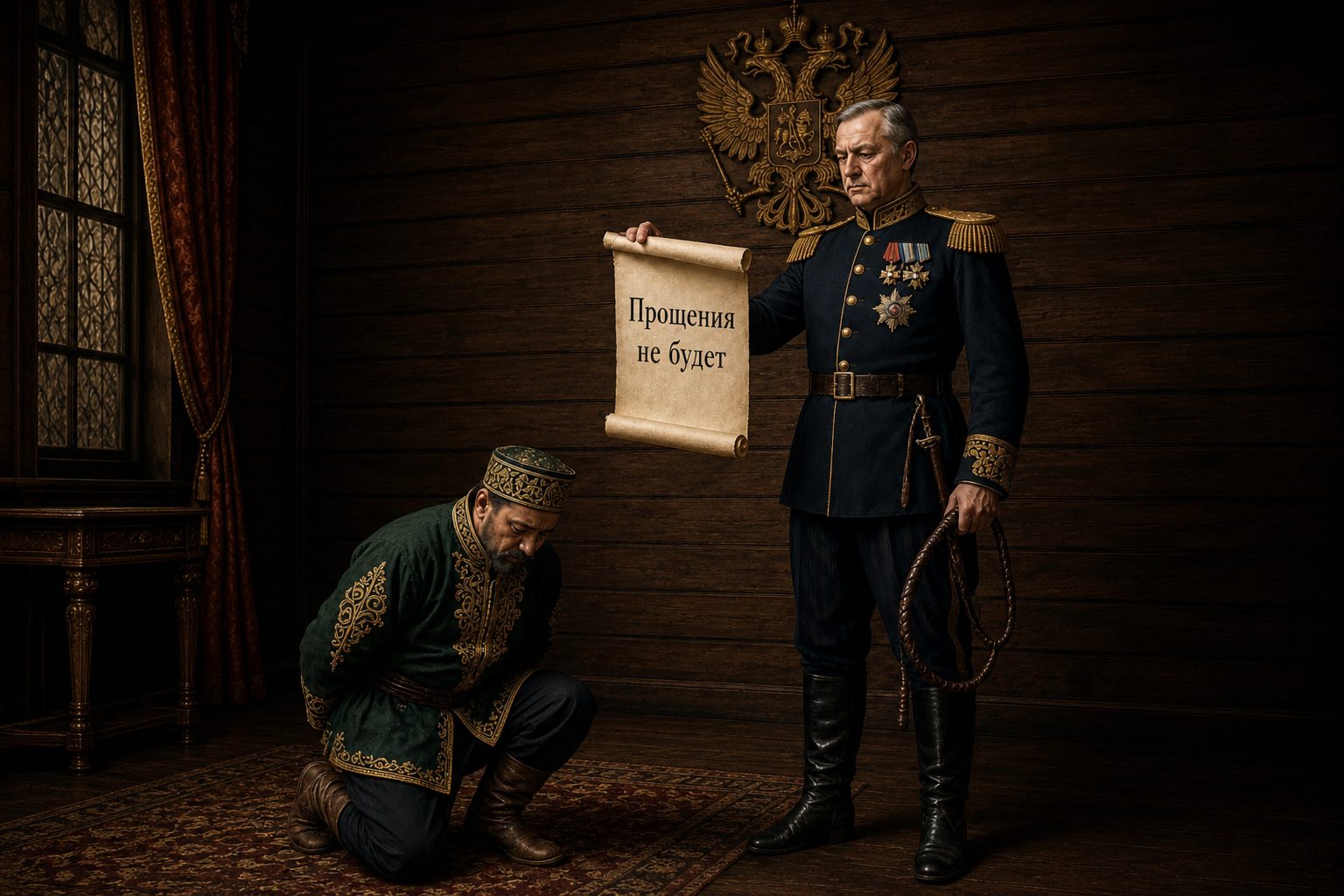
At the United Russia congress on August 22, Dmitry Medvedev said that those who left Russia and wish it defeat would receive ‘no forgiveness.’ The deputy chairman of Russia’s Security Council did not soften his language: he called those who left ‘scum.’
It is worth examining the construction itself, because it matters more than the speaker.
Elasticity is not carelessness — it is the function
‘Wishing defeat’ is not a category found in any legal code, and that is precisely why it is useful. It cannot really be disproved: it is not an act that must be demonstrated with evidence, but an inner state that can simply be attributed to someone. A publication, an interview, a donation, participation in a conference — and, if necessary, even silence in the wrong direction — can all be placed under it.
The Government of Independent Tatarstan in Exile does not wish defeat upon the peoples of Russia. We seek an end to an imperial system that disposes of our people, our oil and the lives of our sons. But notice that this clarification changes nothing. Medvedev’s formula is designed so that our own explanation is irrelevant: the qualification is issued in Moscow regardless of what we say about ourselves. That is its purpose and its value to those who use it.
Forgiveness as imperial currency
Pay attention to the word itself. Not ‘responsibility,’ not ‘law’ — ‘forgiveness.’ Forgiveness is granted to someone presumed guilty. Emigration is therefore framed as a transgression, while the Kremlin presents itself as the authority from which mercy is supposed to be begged.
We do not recognize that authority. Exiled Tatar educators did not ask Moscow for forgiveness. Those shot in the 1930s did not. Nor did those who voted for the republic’s sovereignty in 1992. We do not ask for it either. The Kremlin and we operate in different currencies: it pays in forgiveness, while we keep account in the names of the dead.
What the threat means in practice
Words are followed by actions: criminal cases in absentia, wanted notices, requests through Interpol and pressure on relatives who remain at home. That is exactly why practical work in exile exists — petitions, testimony and assistance to people whom the empire has treated as its property. Prime Minister Rafis Kashapov wrote about this work today in his column: around 350 petitions over five years and approximately ten people removed from the Interpol database following such requests.
The promise of ‘no forgiveness’ is also an admission. The Kremlin publicly confirms that it regards not only territory, but also people who have left it, as something it owns. An empire whose subjects ceased to belong to it at the border would simply be a state. This one is not.
Our answer
We are outside the jurisdiction of those who distribute forgiveness. And we work for the day when the question is posed differently: not whether Moscow is willing to forgive Tatars, but what an independent Tatarstan is willing to discuss with Moscow at all. That day comes with independence — and it draws closer each time the empire explains aloud what it believes us to be.
Sources:
Novaya Gazeta Europe, August 22, 2026
Lenta.ru, August 22, 2026