
Kazan Hosts China — Moscow Does the Negotiating
Tatarstan’s trade with China has grown more than twelvefold in a decade. Chinese provinces come to Kazan, forums are held in Kazan and plants are built in Tatarstan — but Russia signs the agreements. The republic provides everything except the right to negotiate in its own name.
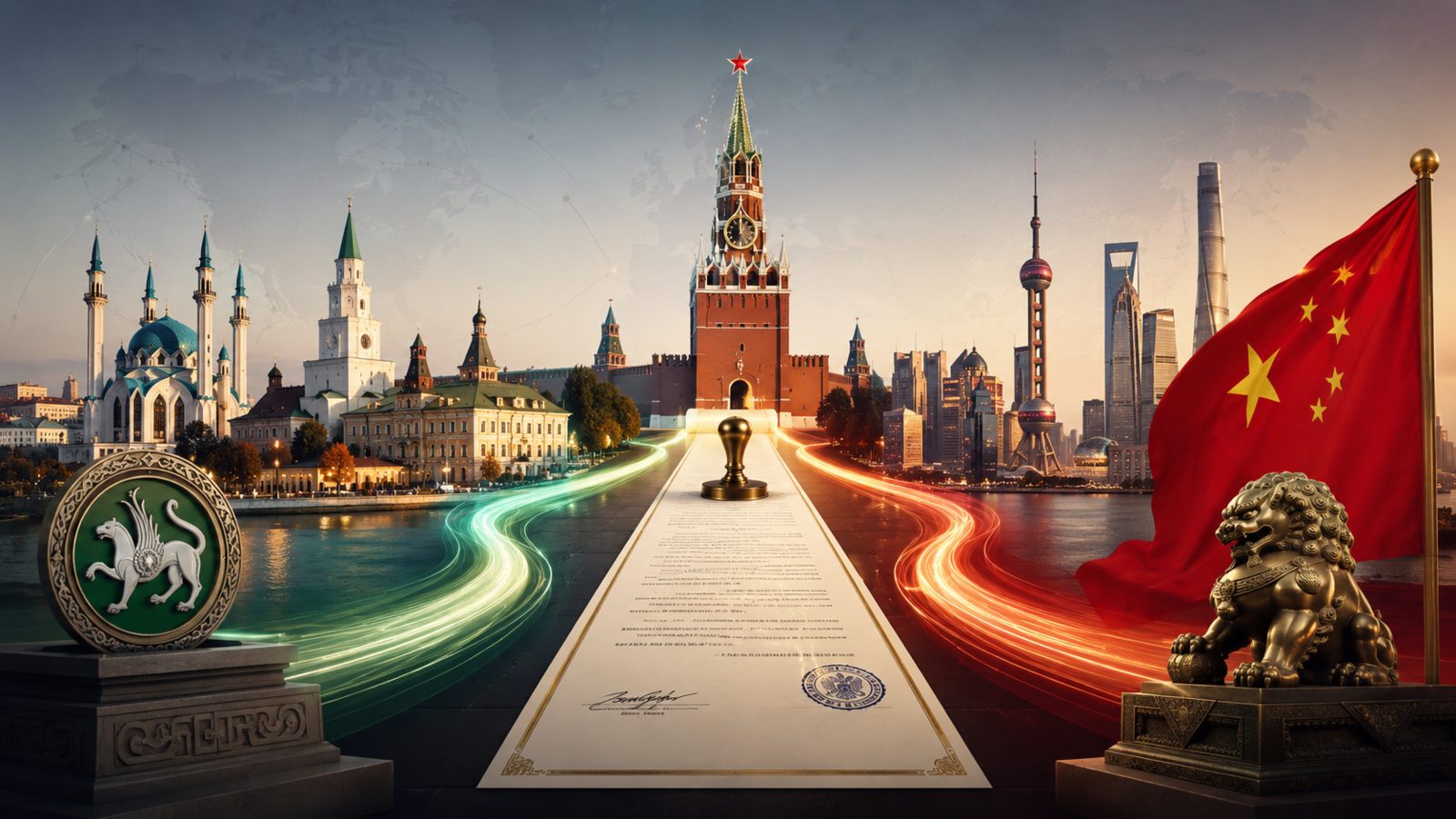
Kazan is steadily becoming Russia’s main platform for engagement with China. The ROSTKI forum brought together more than fifty business sessions, delegations from eight Chinese provinces and federal officials. According to figures cited by the Chinese side, the republic’s trade with China rose from $264 million in 2015 to about $3.35 billion in 2025 — more than twelvefold.
Economically, this is a real resource, and we are not going to pretend that twelvefold growth is bad news. The bad news lies elsewhere.
Whose name is on the business card
The forum is called “Russia and China.” Agreements are signed between Russia and China. When Minnikhanov announced the methionine plant in Nizhnekamsk, he spoke of trust and strategic partnership — between Russia and China.
In this arrangement Tatarstan provides everything: territory, industry, logistics, personnel, regional contacts built up over years, and even the name of the venue. Everything except one thing — the right to put its own signature on the agreement.
This is a classic colonial role in international trade, as old as empires themselves: the colony supplies resources, infrastructure and labor, while the metropolis supplies legal personality and diplomatic protocol. The distribution of benefits follows the same logic: the partnership is strengthened between Beijing and Moscow, the plant stands in Nizhnekamsk, and the drones also arrive in Nizhnekamsk.
What would change
An independent Tatarstan would not have to ask anyone for permission to trade. Agreements with Chinese provinces would be signed in Tatarstan’s name, revenues would be taxed by Tatarstan, and the terms — including environmental standards, labor standards and the share of local contractors — would be determined by Kazan rather than by a third party whose interests are not those of the republic.
The republic already knows how to do business with China — the twelvefold increase proves it. What is missing is only subjecthood: so that the result of this work bears the name of the party that actually did it.
Sources:
China Daily Global, August 24, 2026: results of the ROSTKI forum in Kazan
Tatarstan–China trade figures: publication by the Government of Hunan Province
RT Online, August 21, 2026: Minnikhanov’s statement on Russia–China partnership