
International representation
Developing relations with public institutions, political figures, experts, civic organizations, and national movements outside Tatarstan.
About
Purpose
Our mission is to build durable political and international representation for the idea of an independent Tatarstan: a state in which decisions about the republic’s future are made by its citizens, the Tatar language and culture can develop fully, and human rights and civic equality do not depend on nationality, language, or origin.
We see Tatarstan’s future as that of a democratic civic state, open to the world and to its neighbours. For us, independence does not mean isolation; it means the ability to determine domestic and foreign policy, protect national identity, build institutions governed by law, and develop relations with other states and peoples on the basis of equality.
Institutional work
Developing relations with public institutions, political figures, experts, civic organizations, and national movements outside Tatarstan.
Documenting persecution, defending political prisoners, and drawing international attention to human-rights violations.
Developing and publicly discussing the political, legal, and institutional questions surrounding Tatarstan’s future.
Supporting the Tatar language and cultural inheritance while preserving the memory of defining events in Tatar history.
Dialogue with movements of the peoples of Idel-Ural and other regions on self-determination, security, and future relations among states and societies.
Building an open archive of official statements, documents, research, international appeals, and Government materials.
About
The Government of Independent Tatarstan in Exile is a political and public institution that represents supporters of Tatarstan’s state self-determination and independence and conducts its work outside the Russian Federation.
The Government’s activities include international representation and public diplomacy, the preparation of statements and documents, advocacy for the rights of Tatars and other Indigenous peoples, coverage of political repression, preservation of historical memory, and the development of cooperation with democratic, national, and human-rights movements.
We regard the question of Tatarstan’s future as more than a question of state status. It is a question of a society’s ability to make political decisions independently, preserve its language, culture, and historical memory, and take responsibility for its own future.
A 2026 draft program now under Government review and public discussion translates these values into a proposed framework for citizenship, democratic transition, constitutional institutions, language policy, accountable resource management, social guarantees, and international cooperation. It is not an adopted constitution or final law: under the draft itself, final legitimacy would belong to an elected Constituent Assembly and to the people through a referendum.
Institutional history
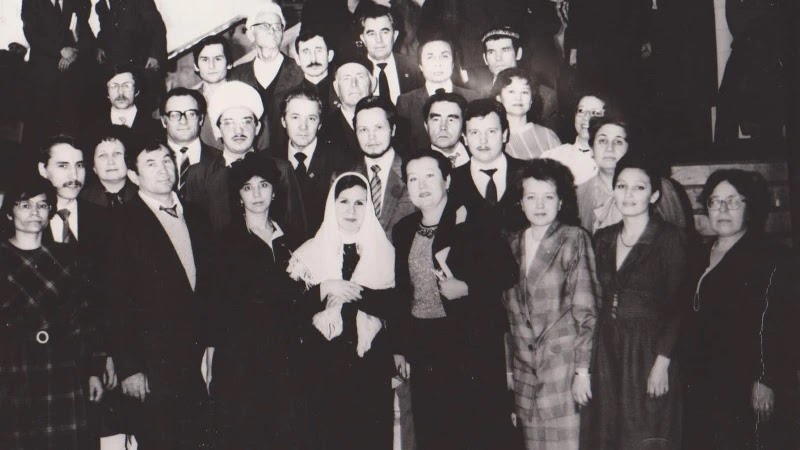
On 20 December 2008, at a special meeting of the Milli Mejlis of the Tatar People, the Declaration of Independence of Tatarstan was adopted. One of its provisions established the Government of Tatarstan in Exile to defend the interests of the Tatar people. This historical connection with the Milli Mejlis is an important part of the Government’s institutional history.
Historical foundation
On 30 August 1990, the Supreme Soviet of the Tatar ASSR adopted the Declaration on State Sovereignty of the Tatar Soviet Socialist Republic. The declaration proclaimed the republic’s state sovereignty and became a key political and legal milestone of the early 1990s.
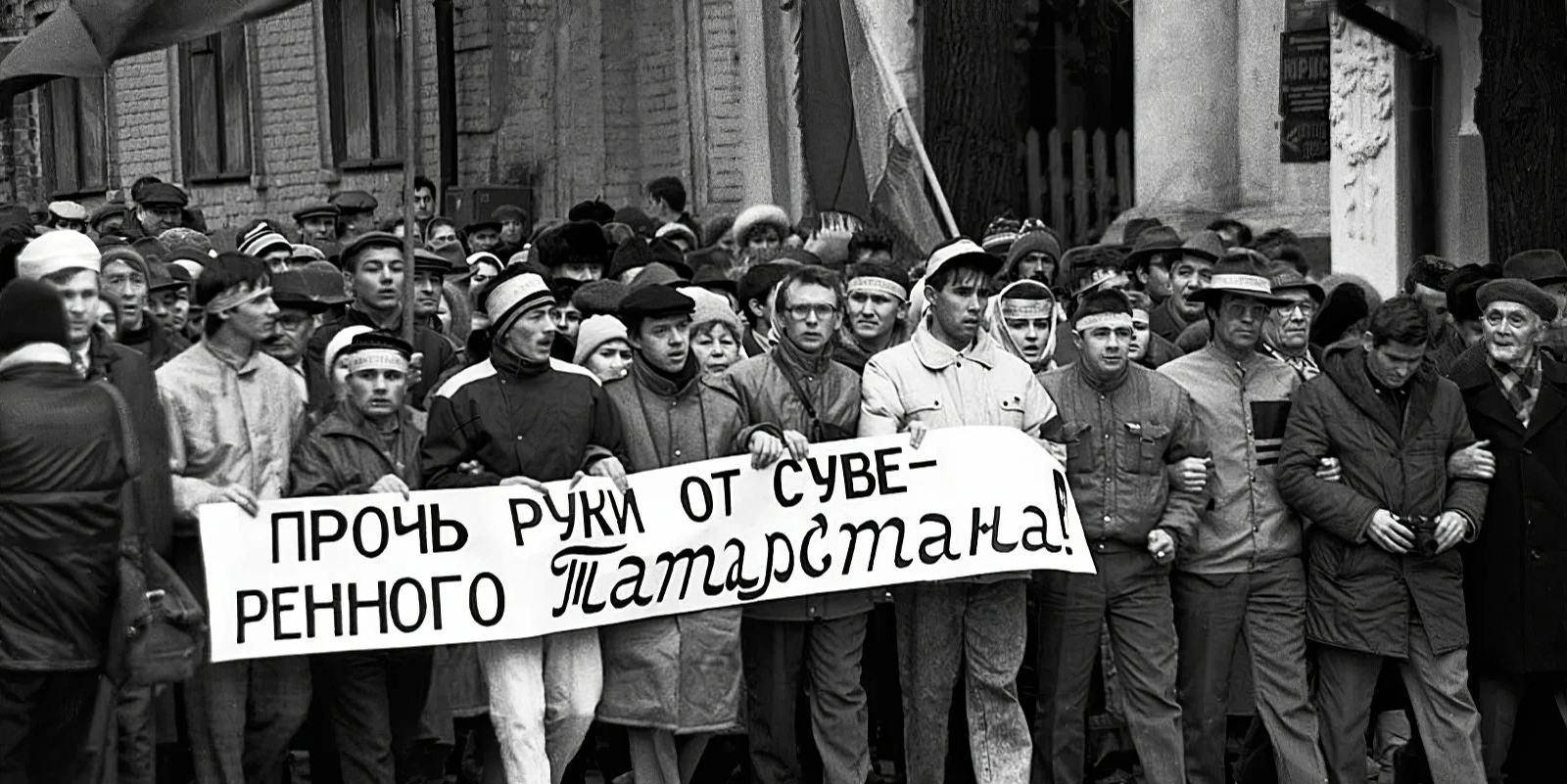
The modern movement for Tatarstan’s state self-determination has deep historical foundations. In the early 1990s, amid the dissolution of the Soviet Union, sovereignty became the subject of broad public and political debate in the republic.
On 6 November 1992, the Constitution of the Republic of Tatarstan was adopted, setting out the principal foundations of the republic’s system of government under the new political conditions.
On 21 March 1992, citizens of Tatarstan took part in a referendum on the state status of the republic. For the independence movement, that referendum remains a central point in Tatarstan’s modern political history and an example of direct popular expression.
The Government of Independent Tatarstan in Exile regards the preservation of documents, photographs, and testimony from this period as an essential part of Tatarstan’s historical memory and public archive.
A democratic future
These principles summarize the political and civic foundations on which we believe a future democratic Tatarstan should be built.
Political decisions about Tatarstan’s future should be made by its citizens.
Human rights and equality must not depend on nationality, language, or origin.
The Tatar language, cultural inheritance, documentary record, and historical memory require durable public institutions.
Any interim authority must have limited powers, a published timetable, free elections, and a clear endpoint set by a constitution approved by the people.
Independent courts, public audit, transparent budgets, local government, and individual due process must prevent a new concentration of unaccountable power.
Restoring Tatar language and culture should proceed together with minority protections, education, healthcare, and policies that expand opportunity for every resident.