
Cadres from the Trenches: The Empire Is Growing a New ‘Elite’ for Tatarstan
Kazan has opened a School for Beginning Deputies for veterans of Russia’s war against Ukraine who already sit on local councils. A republic that has lost thousands of sons in this war is now being supplied with officials from the same war. This has a name: the militarization of power.
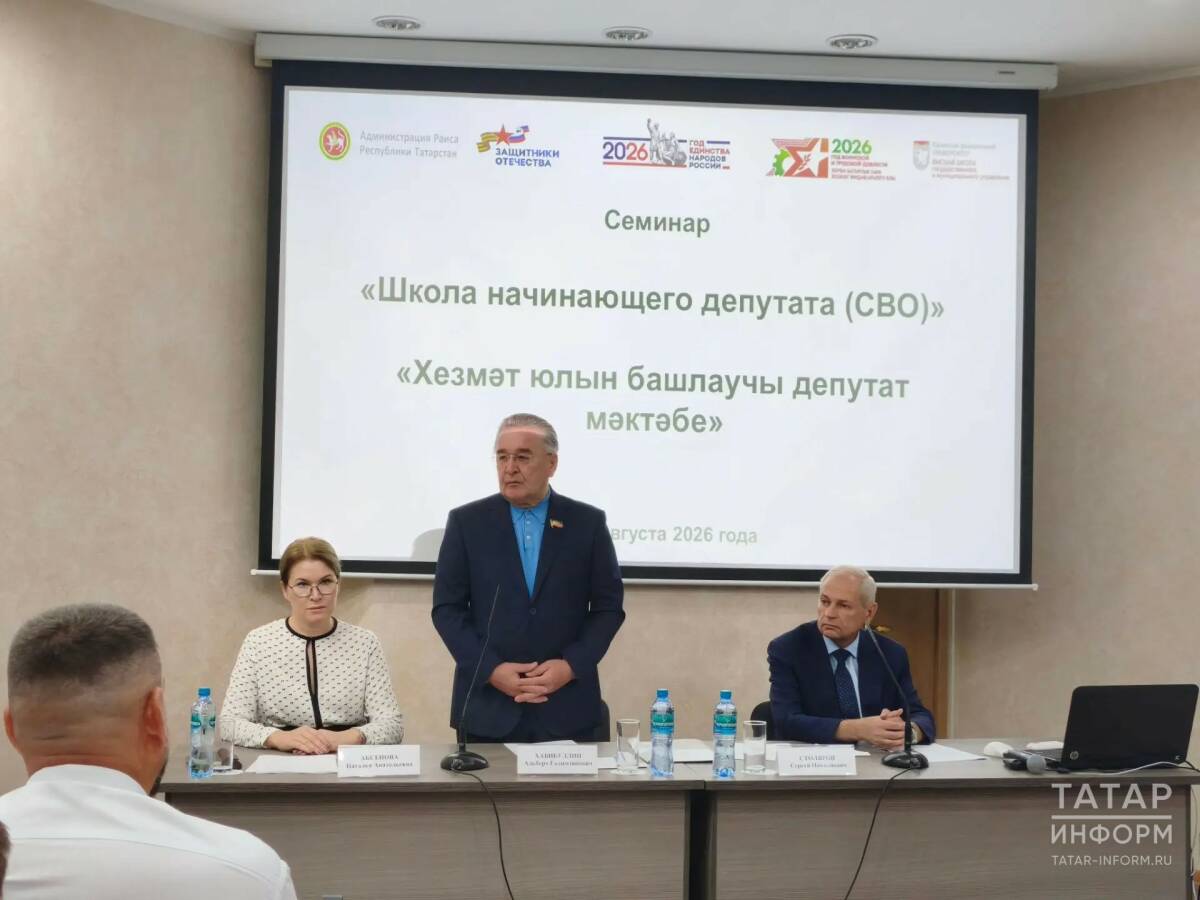
Kazan Federal University hosted the first seminar of the ‘School for Beginning Deputies’ for local council deputies who took part in Russia’s war against Ukraine. Around twenty people attended, including graduates of the ‘Batyrlar. Heroes of Tatarstan’ program. The initiative came from the republic’s Association of Municipalities, was backed personally by Rustam Minnikhanov, and is being implemented by KFU’s Higher School of Public Administration. The State Council described the project as a logical continuation of the republic’s program for war participants. Nor is this a one-off initiative: since June, the same KFU school has been teaching veterans the basics of public administration in preparation for entering the republic’s civil service.
The point is not that a person with frontline experience is less capable than anyone else of doing legislative work. The question is who selects such people and by what criterion. Here, a mandate is not simply won from voters; participation in the metropolis’s war becomes part of the route into office. The same state that launched the war is building the pipeline and rewarding a form of service to itself.
What has actually been built
The empire is assembling a personnel route: front line → ‘heroes’ program → elected mandate → deputy school → civil service. Participation in a war against a neighboring country is becoming an official qualification for governing Tatarstan. In a republic where the deaths of more than nine and a half thousand natives have been confirmed, the war is no longer presented only as a tragedy — it is being turned into a line on a career résumé. That is what the militarization of power looks like: not tanks in the streets, but a military enlistment office inside the personnel department.
For two centuries, Kazan University was one of the places from which education spread across the Volga region. Now its facilities are being used to teach how war can be converted into political power. An imperial system repurposes whatever it reaches: minarets for sirens, universities for producing loyal cadres.
The theft of a vocabulary
The name of the program deserves separate attention. ‘Batyr’ is a word from Tatar epic tradition; for centuries, Tatars used it for their defenders and heroes. It is now being used in a state program for participants in Russia’s war. Resources and people are not the only things being appropriated. The political meaning of our own words is being appropriated as well.
Whose choice is this?
The obvious objection is that veterans have a right to enter politics. Of course they do — like any citizens, through elections. But there is also a specially created state personnel mechanism that turns participation in the war into an advantage for further political and administrative advancement.
In an independent Tatarstan, the road to public office should be determined by service to the citizens of Tatarstan and by their free political choice — not by participation in someone else’s war and not by a special state personnel program. For now, this school remains part of a broader militarization of public authority.