
The Time Capsule Was Laid. The Basements Remained Locked
In Nizhnekamsk, where thirteen people were killed eleven days earlier, officials ceremonially launched a project worth around one hundred billion rubles. The system assembled that money and infrastructure in months. The problem of inaccessible shelters remains unresolved. This is not about a lack of money — it is about whose life makes it into the budget.
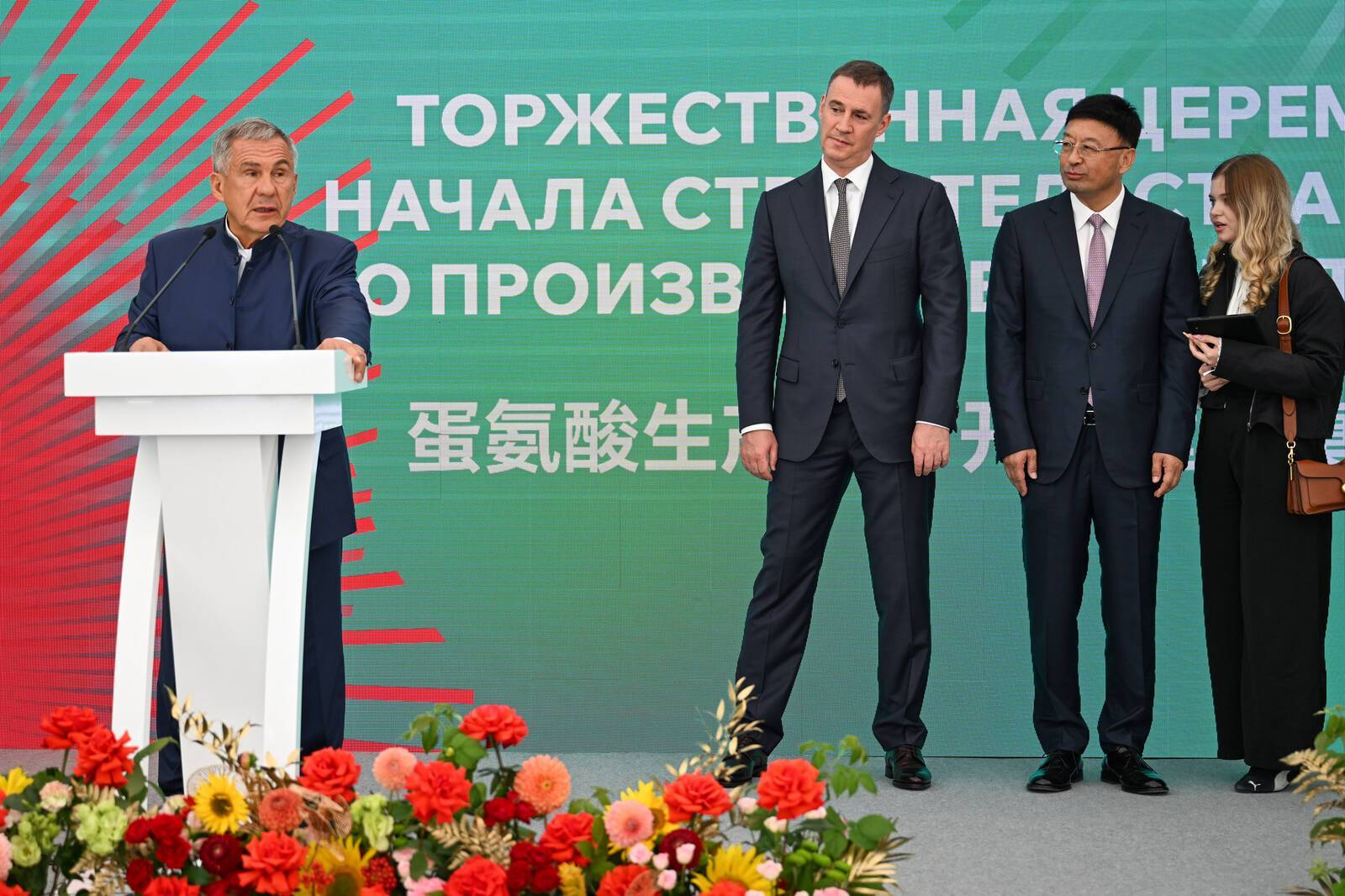
On August 21 in Nizhnekamsk, Rustam Minnikhanov and Russian Deputy Prime Minister Dmitry Patrushev launched construction of Russia’s first DL-methionine plant. The project brings together Tatneft and China’s Eppen at the Green Valley special economic zone: planned output is 100,000 tonnes of feed amino acid a year, with 390 jobs. The republic puts investment at 106 billion rubles, while some outlets cite 83 billion; we do not conceal that discrepancy. The ceremony also included the placement of a time capsule.
Eleven days earlier, thirteen people were killed in the same city. Among them were a five-year-old girl and nine workers living in a hostel in the industrial zone.
What the system can do — and what it cannot
The argument is not that money for the plant should simply have been diverted to shelters: these are private investments with their own financing logic. The issue is speed and priority.
When the center wants an industrial project, permits, an SEZ site, a Chinese partner, a deputy prime minister at the ceremony and roughly one hundred billion rubles all appear on schedule. When residents of Nizhnekamsk need unlocked basements and clear shelter addresses, complaints drag on for months; after thirteen coffins, the head of the republic says that people themselves failed to take elementary precautions. Notice what is being acknowledged at the same time: the complaints — and a reproach directed at the dead.
The system is not powerless. It can mobilize extremely well — just not necessarily for those who are under fire.
‘Technological independence’ delivered with a Chinese key
Patrushev called the plant a step toward technological independence for Russia’s agricultural sector. Break down the formula: the technology is Chinese, the partner is Chinese, the raw materials and capital are tied to Tatarstan, while the ‘independence’ is Russian. Import substitution through imports, paid for with our oil.
Minnikhanov, meanwhile, spoke of a high level of trust and strategic partnership between Russia and China. Between Russia and China. In that sentence, Tatarstan is not an equal party; it is the location and the cash desk.
What will be written to the descendants
There is a grim symbolism in laying a time capsule in a city that had already greeted dawn under air-raid alerts three times in August. One wonders what the message inside says. That a biotechnology cluster was being built here in 2026? Or that in the same August, the bodies of workers housed next to a military target were being sent back to their families?
An independent Tatarstan would build factories too — biotechnology and petrochemicals among them. The difference is one line in the budget: in a country accountable to its own citizens, public safety comes first, not as a residual item. As long as the priorities are set elsewhere, Nizhnekamsk gets a capsule for descendants instead of an unlocked basement for the living.
Sources:
Government of Russia, August 21, 2026
RT Online, August 21, 2026
Realnoe Vremya, August 21, 2026
Business Online, August 21, 2026
Tatar-inform: Minnikhanov’s statement on shelters