
A New Ministry of Defense Trap: How Medical Reform Threatens the Indigenous Peoples of Idel-Ural
The Russian authorities are preparing changes to the medical examination procedures applied to mobilized personnel and contract servicemen. The Russian Ministry of Defense has published draft amendments to Article 5.1 of Federal Law No. 53-FZ, On Military Duty…
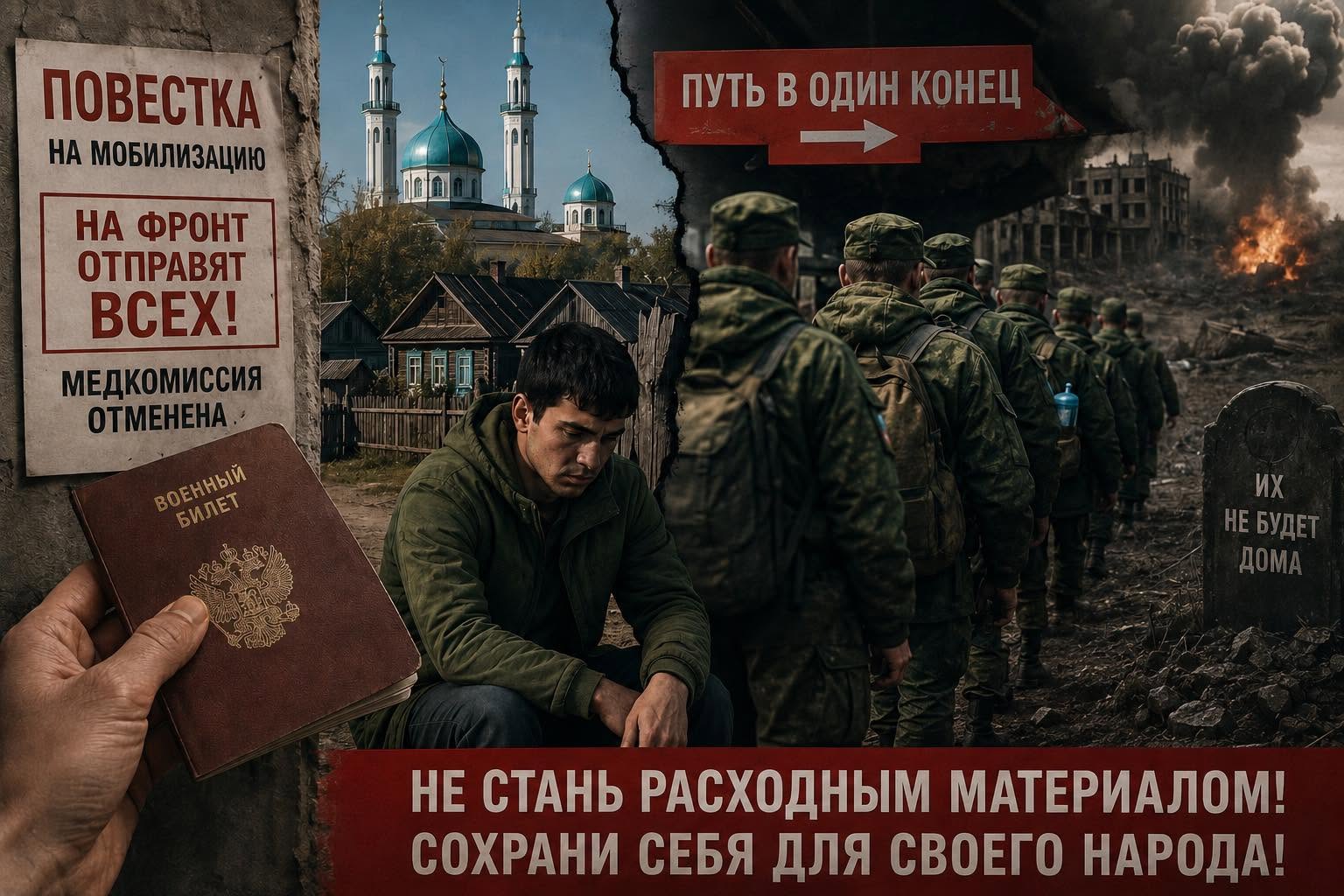
The Russian authorities are preparing changes to the medical examination procedures applied to mobilized personnel and contract servicemen. The Russian Ministry of Defense has published draft amendments to Article 5.1 of Federal Law No. 53-FZ, On Military Duty and Military Service. The proposed changes would significantly alter the procedure for military medical examinations.
This reform is particularly relevant to Tatarstan, Bashkortostan, Udmurtia, Chuvashia, Mari El, and Mordovia. In the event of another covert or openly declared mobilization campaign, residents of the national republics of the Volga and Ural regions may once again be among the populations most heavily affected.
The Essence of the Medical Reform
The proposed amendments change medical examination procedures during periods of mobilization and wartime.
Removal of mandatory comprehensive medical examinations by default. A full medical examination to determine fitness for military service may no longer be mandatory in every case. More comprehensive examinations may instead be conducted when specific medical indications are present.
A simplified examination instead of comprehensive screening. Rather than undergoing examinations by a full range of medical specialists, individuals may be subjected to a simplified medical assessment under procedures established by the Ministry of Defense.
Reduced medical restrictions. People suffering from chronic illnesses, the consequences of previous injuries, and other health conditions may find it more difficult to obtain an exemption or restrictions on their fitness for military service.
Why Is Idel-Ural at Risk?
Since the beginning of the full-scale war, independent investigations have repeatedly highlighted substantial regional disparities in mobilization and military casualties.
For Tatars, Bashkirs, Chuvash, Mari, Erzya, Moksha, and other peoples of the Volga-Ural region, such developments may have serious long-term consequences.
Demographic losses. Military recruitment disproportionately affects working-age and reproductive-age men from rural communities and smaller settlements. For smaller ethnic communities, such losses can have an especially significant impact.
Regional disparities in casualties. Residents of national republics and economically disadvantaged regions may suffer disproportionately high military losses compared with Russia’s largest metropolitan areas.
A threat to national identity. Population decline, migration, and continuing linguistic assimilation create additional risks for the preservation of national cultures, languages, and communities.
What Risks Face Those Who Go to War?
Participation in the war against Ukraine involves an immediate risk to life and health. Reduced medical screening may further increase the danger faced by people with chronic illnesses or other medical contraindications.
Potential risks include:
- inadequate training and equipment;
- deployment to particularly dangerous areas of combat;
- serious restrictions on the ability to terminate military service or a military contract before the end of service obligations.
Practical Information for Those Who Do Not Want to Participate in the War
Anyone who does not wish to participate in combat should seek independent legal advice and obtain reliable information concerning their rights.
Human rights organizations. Initiatives providing consultations on conscription and military service reportedly include Idite Lesom (“Go by the Forest”), the School of the Conscript, and the Conscientious Objectors Movement. The authenticity and current status of their official contacts should be independently verified before making contact.
Regional and national civic initiatives may also provide legal and humanitarian assistance.
Leaving the Russian Federation. Border-entry requirements, visa regulations, and permitted periods of stay may change. Travelers should verify current requirements directly with the official authorities of the destination country.
Legal protection. Individuals should maintain documentation of their health conditions, preserve medical records, and seek advice from qualified lawyers specializing in military law when necessary.
The Russian Constitution also provides for the possibility of alternative civilian service in circumstances established by law. Whether this right can be invoked in a particular case requires an individual legal assessment.
Do not give your life to a war you do not support. Protect yourself, your families, and the future of your peoples.
Respectfully,
Raushan Gizatullin
Representative of the Government of Independent Tatarstan in Exile in Bavaria