
The Empire Versus a Pensioner and a Song: the FSB Found a Threat to the Regime in Bugulma
A criminal case over a song more than 130 years old. A state that fears pensioners and 19th-century melodies is not strong. It is a diagnosis — and a verdict on a system Tatarstan must leave behind.
A criminal case over a song more than 130 years old. A state that fears pensioners and 19th-century melodies is not strong. It is a diagnosis — and a verdict on a system Tatarstan must leave behind.
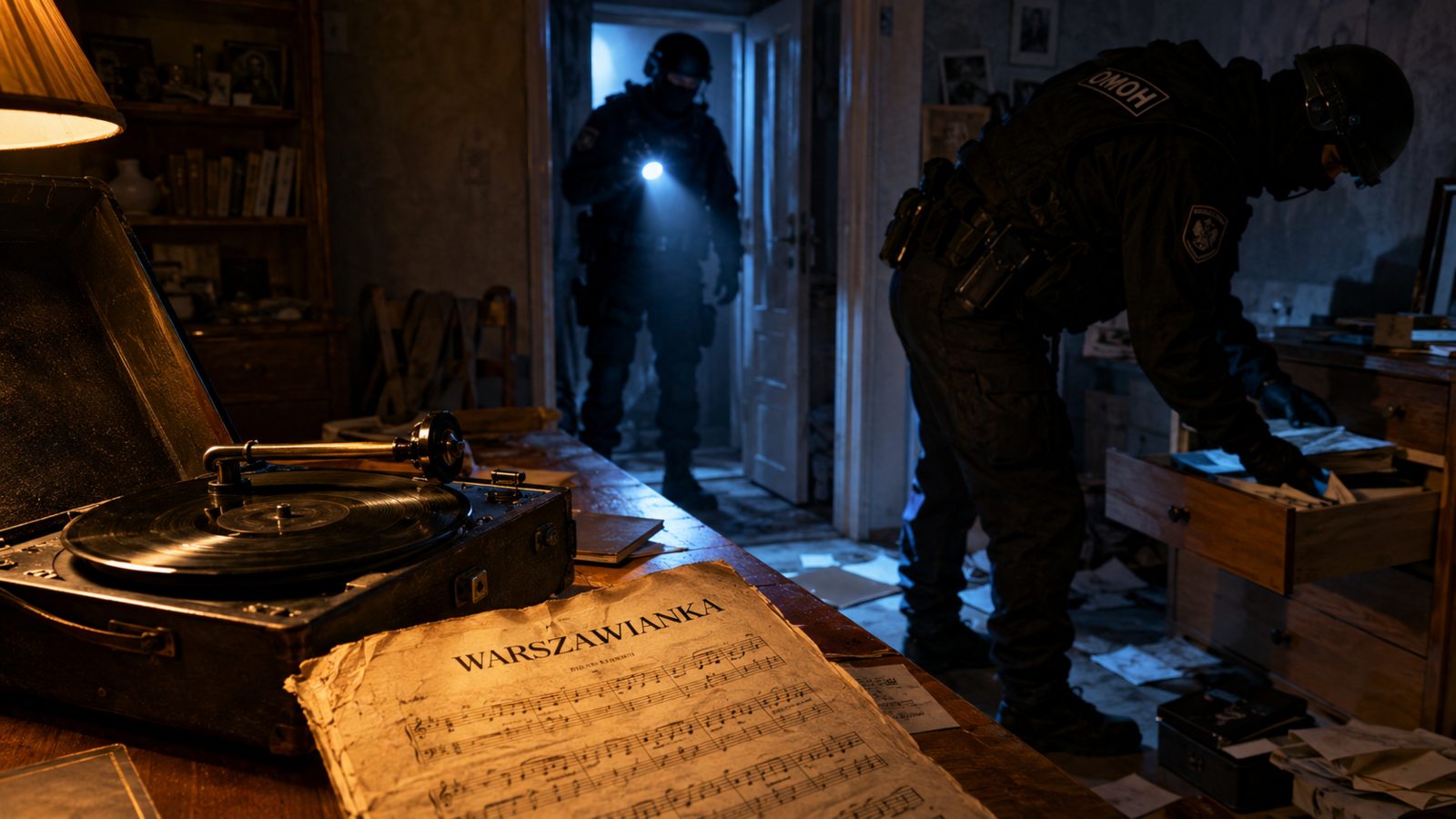
Irina Zadavina, a 63-year-old resident of Bugulma, says a criminal case was opened against her under Part 2 of Article 280 of the Russian Criminal Code — “public calls for extremist activity.” On August 11 her apartment was searched, she was then questioned at the FSB directorate in Kazan and released several hours later. According to her, the reason was “Warszawianka,” a revolutionary song from the late 19th century that she had posted on her VKontakte page in 2024. Zadavina’s video appeal was published by the IREK | Tatarstan channel; Radio Liberty reported the details.
We rely on Zadavina’s own public statement — naturally, no investigative order has been shown to us. But the pattern is painfully familiar: once again, the door of a Tatarstan resident’s home has been opened from the outside.
The state became afraid of its own soundtrack
The historical irony is deafening. “Warszawianka” was sung by those who built the Soviet state. It was taught in Soviet schools, used in state cinema and played for decades on state radio. Now the heirs of that same system come to search the home of a 63-year-old woman because she remembered the song. The empire has reached the point where its own record collection has become “extremism.”
Kazan is not allowed to protect anyone
Article 280 is federal. The FSB is federal. Tatarstan has neither its own criminal jurisdiction nor courts capable of standing between a resident of the republic and Moscow’s repressive machinery. Kazan cannot protect Irina Zadavina. In principle, Kazan is not allowed to protect anyone.
We will be told this is an isolated case, an excess on the ground. No. This is a system functioning as designed. It exists so that every resident of Tatarstan — from an activist to a pensioner — knows that a post, a song or a memory can bring the authorities to anyone’s door.
The difference between a colony and a republic
The only reliable protection from someone else’s repressive machinery is a state of one’s own. An independent Tatarstan with its own law and its own courts is a country where no one’s home is searched over a song. That is the whole difference between a colony and a republic.